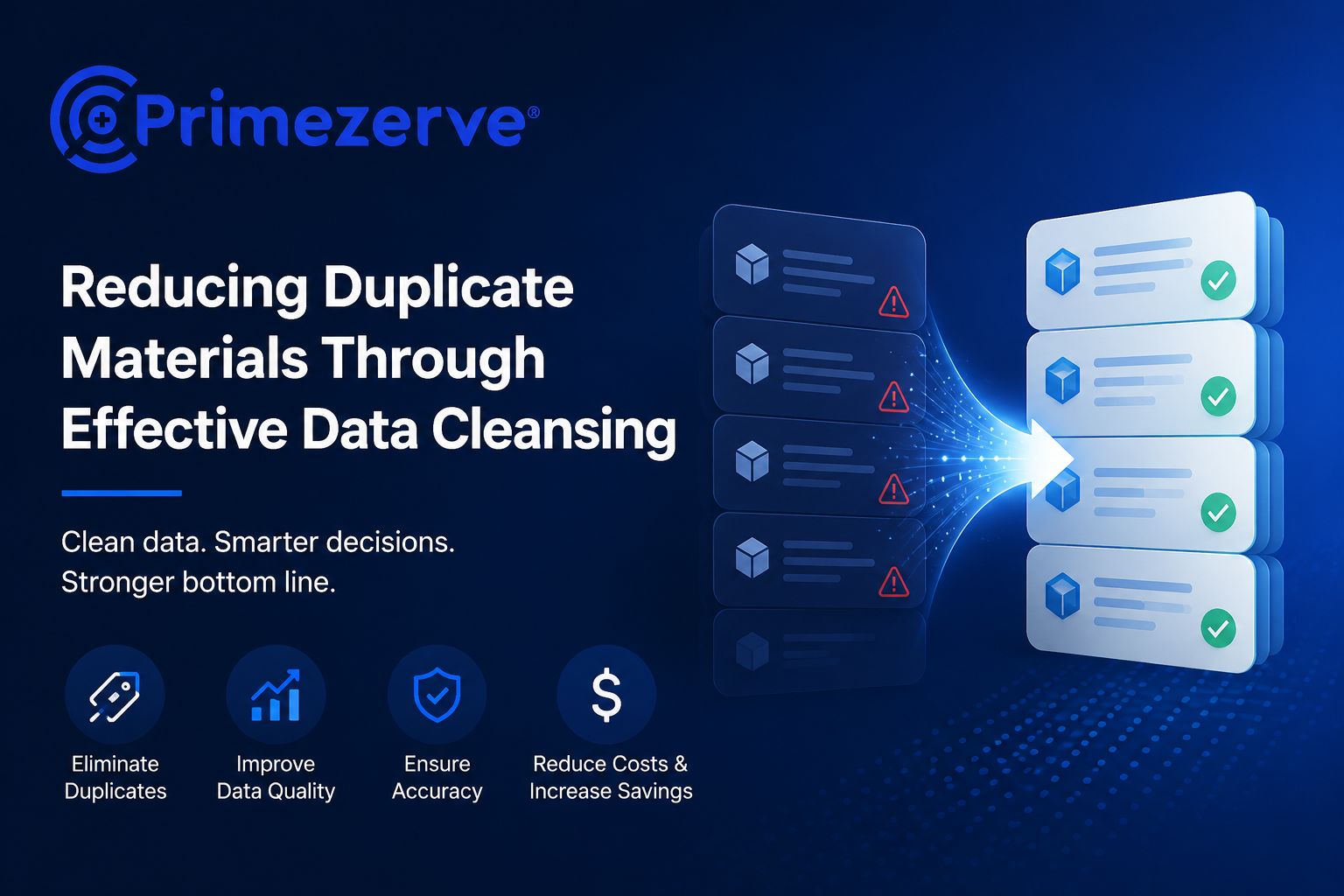
The Financial Impact of Poor Material Data Quality
Many organizations underestimate the financial burden associated with poor material data.
Increased Inventory Costs
Duplicate and inaccurate material records frequently lead to overstocking.
When materials exist under multiple descriptions or identifiers, procurement teams may purchase items already available in inventory.
The result includes:
- • Excess inventory
- • Higher carrying costs
- • Increased warehouse space requirements
- • Obsolete stock accumulation
Organizations often discover millions of dollars tied up in unnecessary inventory due to poor material master data quality.
Higher Procurement Expenses
Procurement teams depend on accurate material information to make informed purchasing decisions.
Poor data quality can cause:
- • Duplicate purchases
- • Missed contract pricing opportunities
- • Supplier consolidation challenges
- • Increased sourcing effort
Without a clear view of material usage and spend patterns, organizations lose valuable purchasing leverage and cost-saving opportunities.
Operational Inefficiencies Caused by Poor Data
Time Lost Searching for Materials
Maintenance, engineering, and procurement teams often spend excessive time searching for the correct material record.
When material descriptions are inconsistent, employees may:
- • Create new records unnecessarily
- • Order incorrect items
- • Delay critical maintenance activities
Even a few minutes lost per transaction can translate into thousands of hours annually across large organizations.
Reduced Productivity
Employees frequently compensate for poor data quality by manually validating information, correcting records, and resolving discrepancies.
These activities consume valuable resources that could otherwise focus on strategic initiatives and operational improvement.
Supply Chain Performance Risks
Material data serves as a critical foundation for supply chain operations.
When data quality is poor, organizations face:
Inaccurate Demand Planning
Incomplete or duplicate records can distort inventory consumption patterns and forecasting models.
This leads to:
- • Stock shortages
- • Excess inventory
- • Production disruptions
Delayed Procurement Cycles
Incorrect material information often results in purchasing delays and supplier communication challenges.
Reliable material data enables faster sourcing decisions and more responsive supply chain operations.
Impact on Maintenance and Asset Management
For asset-intensive industries, material data quality directly influences maintenance performance.
Poor data can create:
- • Spare parts duplication
- • Difficulty locating critical components
- • Increased equipment downtime
- • Delayed repair activities
Maintenance teams rely on accurate material records to ensure the right parts are available when needed.
Even small data errors can contribute to significant operational disruptions.
ERP Migration Risks
Material Master Data Cleanup,Material Data Governance,Duplicate Material Identification,Material Data Enrichment,Material Master Standardization,Data Quality Management
,ERP Data Cleansing ,Inventory Data Accuracy,Procurement Data Management ,Supply Chain Data Quality.
Organizations preparing for ERP modernization initiatives often discover that duplicate material records significantly increase migration complexity, project timelines, and implementation costs.
How Poor Material Data Affects ERP Transformation Projects
Many organizations initiate data quality programs during ERP modernization initiatives.
Unfortunately, poor material data often becomes one of the largest obstacles to successful implementation.
Increased Migration Complexity
Migrating duplicate and inconsistent material records increases project complexity and cost.
Project teams spend significant time:
- • Identifying duplicates
- • Correcting errors
- • Validating information
- • Rebuilding classification structures
Reduced System Performance
A modern ERP system is only as effective as the data it contains.
Migrating poor-quality data into a new platform simply transfers existing problems into a more advanced environment.
Material data cleansing should always be a key component of ERP transformation planning.
The Hidden Cost of Duplicate Material Records
Duplicate materials represent one of the most common and costly material master data issues.
Duplicate records can lead to:
Duplicate records can lead to:
- • Excess inventory
- • Duplicate purchases
- • Inaccurate inventory reporting
- • Supplier fragmentation
- • Increased maintenance costs
Organizations frequently discover that a significant percentage of their material master records represent duplicate items.
Eliminating duplicates often generates immediate operational and financial benefits.
Compliance and Governance Risks
In regulated industries, material data quality can directly impact compliance efforts.
Poor data may result in:
- • Incorrect regulatory classifications
- • Incomplete documentation
- • Audit findings
- • Increased compliance risks
Establishing strong material data governance frameworks helps organizations maintain data integrity and regulatory compliance.
How Material Data Cleansing Solves These Challenges
Material data cleansing provides a structured approach to improving data quality.
Key activities include:
Data Standardization
Creating consistent naming conventions and material descriptions.
Duplicate Identification and Removal
Detecting and consolidating duplicate records.
Data Enrichment
Adding missing specifications, classifications, and supplier information.
Validation and Quality Control
Ensuring data accuracy and completeness before use.
Governance Implementation
Establishing processes that prevent future data quality issues.
Together, these practices create a trusted foundation for enterprise operations.
Benefits of High-Quality Material Data
Organizations that prioritize material data quality typically achieve:
Improved Inventory Accuracy
Accurate records provide greater visibility into inventory levels and material availability.
Reduced Procurement Costs
Clean data supports strategic sourcing and spend optimization.
Enhanced Operational Efficiency
Employees spend less time resolving data issues and more time driving value.
Better Decision-Making
Reliable information improves reporting, forecasting, and analytics.
Faster Digital Transformation
High-quality data accelerates ERP implementations and modernization initiatives.
Best Practices for Maintaining Material Data Quality
To achieve sustainable results, organizations should:
- • Establish material data standards
- • Implement governance policies
- • Conduct regular data quality audits
- • Use automated validation tools
- • Monitor data quality metrics continuously
- • Train users on proper material creation processes
Data quality should be viewed as an ongoing business initiative rather than a one-time cleanup project.
How Primezerve Helps Organizations Improve Material Data Quality
At PrimeZerve, we specialize in helping organizations transform material master data into a strategic business asset.
Our services include:
- • Material Data Cleansing
- • Material Data Standardization
- • Duplicate Material Removal
- • Material Data Enrichment
- • Master Data Governance
- • ERP Data Migration Support
- • Data Quality Assessments
Our proven methodologies help enterprises improve operational performance, reduce costs, and build a strong foundation for digital transformation.
Conclusion
Poor material data quality carries hidden costs that extend far beyond the master data team. From excess inventory and procurement inefficiencies to ERP migration challenges and supply chain disruptions, inaccurate material data can impact nearly every aspect of business performance.
Organizations that invest in material data cleansing, governance, and standardization gain greater visibility, improved efficiency, and stronger decision-making capabilities.
By proactively addressing material data quality issues, enterprises can reduce operational risk, lower costs, and position themselves for long-term success.
With Primezerve as your data quality partner, you can transform material master data from a business challenge into a competitive advantage.