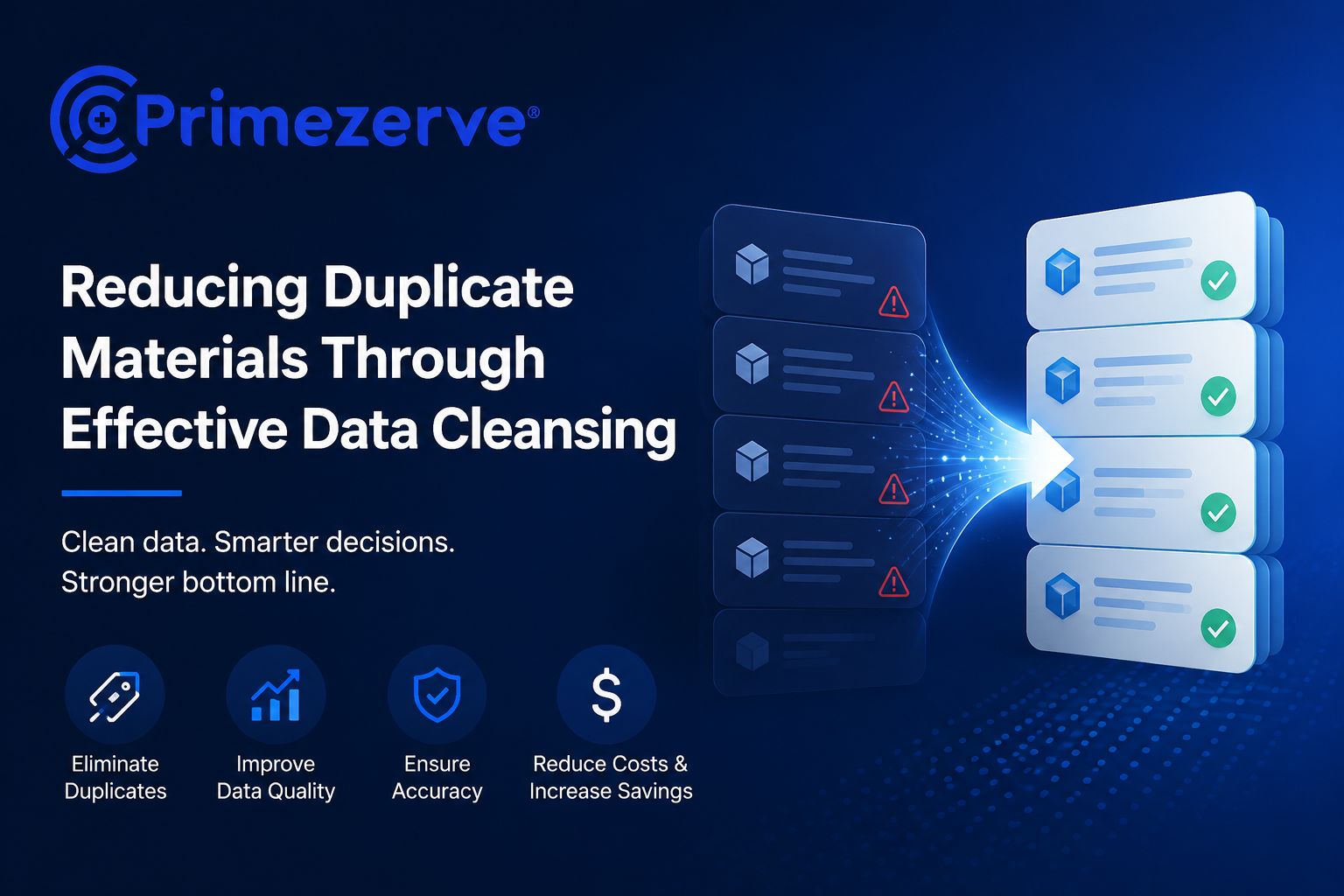
The Business Impact of Duplicate Materials
Material Master Data Cleanup,Material Data Governance,Duplicate Material Identification,Material Data Enrichment,Material Master Standardization,Data Quality Management
,ERP Data Cleansing ,Inventory Data Accuracy,Procurement Data Management ,Supply Chain Data Quality.
Increased Inventory Costs
Material Master Data Cleanup,Material Data Governance,Duplicate Material Identification,Material Data Enrichment,Material Master Standardization,Data Quality Management
,ERP Data Cleansing ,Inventory Data Accuracy,Procurement Data Management ,Supply Chain Data Quality.
When duplicate records exist, procurement teams may unknowingly purchase items already available in inventory. This leads to excess stock, increased carrying costs, and inefficient warehouse utilization.
Procurement Inefficiencies
Material Master Data Cleanup,Material Data Governance,Duplicate Material Identification,Material Data Enrichment,Material Master Standardization,Data Quality Management
,ERP Data Cleansing ,Inventory Data Accuracy,Procurement Data Management ,Supply Chain Data Quality.
Duplicate materials make it difficult for procurement teams to identify approved suppliers and negotiate optimal pricing. Multiple purchase histories for the same item can obscure spending patterns and reduce purchasing leverage.
Incomplete Data
Material Master Data Cleanup,Material Data Governance,Duplicate Material Identification,Material Data Enrichment,Material Master Standardization,Data Quality Management
,ERP Data Cleansing ,Inventory Data Accuracy,Procurement Data Management ,Supply Chain Data Quality.
Missing attributes can disrupt procurement, production, and reporting processes.
Poor Reporting and Analytics
Material Master Data Cleanup,Material Data Governance,Duplicate Material Identification,Material Data Enrichment,Material Master Standardization,Data Quality Management
,ERP Data Cleansing ,Inventory Data Accuracy,Procurement Data Management ,Supply Chain Data Quality.
Accurate reporting depends on clean and consistent master data. Duplicate records can distort inventory levels, spending analysis, and forecasting models, leading to poor business decisions.
Operational Delays
Material Master Data Cleanup,Material Data Governance,Duplicate Material Identification,Material Data Enrichment,Material Master Standardization,Data Quality Management
,ERP Data Cleansing ,Inventory Data Accuracy,Procurement Data Management ,Supply Chain Data Quality.
Production and maintenance teams often spend valuable time searching for the correct material record. This can delay purchasing, maintenance activities, and production schedules.
ERP Migration Risks
Material Master Data Cleanup,Material Data Governance,Duplicate Material Identification,Material Data Enrichment,Material Master Standardization,Data Quality Management
,ERP Data Cleansing ,Inventory Data Accuracy,Procurement Data Management ,Supply Chain Data Quality.
Organizations preparing for ERP modernization initiatives often discover that duplicate material records significantly increase migration complexity, project timelines, and implementation costs.
Why Traditional Approaches Fall Short
Material Master Data Cleanup,Material Data Governance,Duplicate Material Identification,Material Data Enrichment,Material Master Standardization,Data Quality Management
,ERP Data Cleansing ,Inventory Data Accuracy,Procurement Data Management ,Supply Chain Data Quality.
Many organizations attempt to address duplicates through manual reviews or ad hoc cleanup projects. While these efforts may provide temporary improvements, they rarely address the root causes of duplication.
Without standardized processes and governance controls, duplicate records inevitably reappear, creating a continuous cycle of data quality issues.
Effective material data cleansing requires a structured and scalable approach.
A Strategic Approach to Material Data Cleansing
Material Master Data Cleanup,Material Data Governance,Duplicate Material Identification,Material Data Enrichment,Material Master Standardization,Data Quality Management
,ERP Data Cleansing ,Inventory Data Accuracy,Procurement Data Management ,Supply Chain Data Quality.
1. Assess Current Data Quality
Material Master Data Cleanup,Material Data Governance,Duplicate Material Identification,Material Data Enrichment,Material Master Standardization,Data Quality Management
,ERP Data Cleansing ,Inventory Data Accuracy,Procurement Data Management ,Supply Chain Data Quality.
The first step is understanding the scope of the problem.
Organizations should evaluate:
- • Duplicate material counts
- • Inconsistent descriptions
- • Missing attributes
- • Classification issues
- • Data completeness levels
A comprehensive assessment provides a baseline for measuring improvement and prioritizing cleansing activities.
2. Standardize Material Descriptions
Material Master Data Cleanup,Material Data Governance,Duplicate Material Identification,Material Data Enrichment,Material Master Standardization,Data Quality Management
,ERP Data Cleansing ,Inventory Data Accuracy,Procurement Data Management ,Supply Chain Data Quality.
Standardization is one of the most effective ways to prevent duplicates.
Establishing consistent naming conventions ensures that materials are described using a common structure, including:
- • Material type
- • Key specifications
- • Dimensions
- • Manufacturer information
- • Industry standards
Standardized descriptions improve searchability and reduce the likelihood of duplicate creation.
3. Identify and Consolidate Duplicates
Material Master Data Cleanup,Material Data Governance,Duplicate Material Identification,Material Data Enrichment,Material Master Standardization,Data Quality Management
,ERP Data Cleansing ,Inventory Data Accuracy,Procurement Data Management ,Supply Chain Data Quality.
Advanced matching techniques can identify potential duplicate records based on:
- • Material descriptions
- • Manufacturer part numbers
- • Technical specifications
- • Classification attributes
Once identified, duplicate records can be reviewed, validated, and consolidated into a single authoritative material record.
4. Enrich Material Data
Material Master Data Cleanup,Material Data Governance,Duplicate Material Identification,Material Data Enrichment,Material Master Standardization,Data Quality Management
,ERP Data Cleansing ,Inventory Data Accuracy,Procurement Data Management ,Supply Chain Data Quality.
Data cleansing should go beyond duplicate removal.
Organizations should also enrich records with:
- • Complete specifications
- • Classification codes
- • Supplier information
- • Procurement attributes
- • Regulatory data
Enriched data improves decision-making and operational efficiency across the enterprise.
5. Establish Data Governance
Material Master Data Cleanup,Material Data Governance,Duplicate Material Identification,Material Data Enrichment,Material Master Standardization,Data Quality Management
,ERP Data Cleansing ,Inventory Data Accuracy,Procurement Data Management ,Supply Chain Data Quality.
Long-term success depends on strong governance.
Key governance practices include:
- • Material creation workflows
- • Approval processes
- • Data quality standards
- • Ongoing audits
- • User training programs
Governance ensures that clean data remains clean.
The Role of Automation in Duplicate Reduction
Material Master Data Cleanup,Material Data Governance,Duplicate Material Identification,Material Data Enrichment,Material Master Standardization,Data Quality Management
,ERP Data Cleansing ,Inventory Data Accuracy,Procurement Data Management ,Supply Chain Data Quality.
Modern data management solutions leverage automation, artificial intelligence, and intelligent matching algorithms to accelerate duplicate detection and cleansing.
Automated tools can:
- •Analyze large datasets quickly
- • Identify hidden duplicate patterns
- • Validate material attributes
- • Enforce standardization rules
- • Monitor data quality continuously
By combining automation with expert review, organizations can achieve faster and more sustainable results.
Benefits of Effective Material Data Cleansing
Material Master Data Cleanup,Material Data Governance,Duplicate Material Identification,Material Data Enrichment,Material Master Standardization,Data Quality Management
,ERP Data Cleansing ,Inventory Data Accuracy,Procurement Data Management ,Supply Chain Data Quality.
Organizations that invest in material data cleansing typically experience:
Improved Inventory Visibility
Material Master Data Cleanup,Material Data Governance,Duplicate Material Identification,Material Data Enrichment,Material Master Standardization,Data Quality Management
,ERP Data Cleansing ,Inventory Data Accuracy,Procurement Data Management ,Supply Chain Data Quality.
A single source of truth enables accurate inventory tracking and better stock optimization.
Reduced Procurement Costs
Material Master Data Cleanup,Material Data Governance,Duplicate Material Identification,Material Data Enrichment,Material Master Standardization,Data Quality Management
,ERP Data Cleansing ,Inventory Data Accuracy,Procurement Data Management ,Supply Chain Data Quality.
Cleaner data supports strategic sourcing and eliminates unnecessary purchases.
Enhanced Operational Efficiency
Material Master Data Cleanup,Material Data Governance,Duplicate Material Identification,Material Data Enrichment,Material Master Standardization,Data Quality Management
,ERP Data Cleansing ,Inventory Data Accuracy,Procurement Data Management ,Supply Chain Data Quality.
Teams spend less time searching for materials and resolving data-related issues.
Better Decision-Making
Material Master Data Cleanup,Material Data Governance,Duplicate Material Identification,Material Data Enrichment,Material Master Standardization,Data Quality Management
,ERP Data Cleansing ,Inventory Data Accuracy,Procurement Data Management ,Supply Chain Data Quality.
Reliable master data improves reporting, forecasting, and analytics.
Faster ERP and Digital Transformation Projects
Material Master Data Cleanup,Material Data Governance,Duplicate Material Identification,Material Data Enrichment,Material Master Standardization,Data Quality Management
,ERP Data Cleansing ,Inventory Data Accuracy,Procurement Data Management ,Supply Chain Data Quality.
High-quality material data reduces implementation risks and accelerates transformation initiatives.
Building a Sustainable Data Quality Program
Material Master Data Cleanup,Material Data Governance,Duplicate Material Identification,Material Data Enrichment,Material Master Standardization,Data Quality Management
,ERP Data Cleansing ,Inventory Data Accuracy,Procurement Data Management ,Supply Chain Data Quality.
Data cleansing should not be viewed as a one-time project. Instead, it should be part of a broader master data management strategy focused on continuous improvement.
Successful organizations combine:
Material Master Data Cleanup,Material Data Governance,Duplicate Material Identification,Material Data Enrichment,Material Master Standardization,Data Quality Management
,ERP Data Cleansing ,Inventory Data Accuracy,Procurement Data Management ,Supply Chain Data Quality.
- • Data quality assessments
- • Standardization frameworks
- • Duplicate prevention controls
- • Governance policies
- • Ongoing monitoring
This proactive approach helps maintain data accuracy while supporting future growth and digital transformation initiatives.
How PrimeZerve Helps
Material Master Data Cleanup,Material Data Governance,Duplicate Material Identification,Material Data Enrichment,Material Master Standardization,Data Quality Management
,ERP Data Cleansing ,Inventory Data Accuracy,Procurement Data Management ,Supply Chain Data Quality.
At PrimeZerve, we specialize in material master data cleansing, enrichment, standardization, and governance solutions that help organizations reduce duplicate materials and improve overall data quality.
Our experts work closely with clients to:
- • Identify and eliminate duplicate records
- • Standardize material descriptions
- • Enhance data completeness and accuracy
- • Support ERP migration and transformation projects
- • Establish sustainable data governance frameworks
By transforming fragmented material data into a trusted business asset, organizations can unlock greater efficiency, reduce costs, and improve operational performance.
Conclusion
Duplicate material records are more than a data management issue—they are a business performance challenge. Left unchecked, they can drive unnecessary costs, reduce productivity, and compromise decision-making.
A structured material data cleansing strategy enables organizations to eliminate duplicates, improve data quality, and create a reliable foundation for procurement, inventory management, and digital transformation success.
With the right combination of expertise, technology, and governance, businesses can move from data chaos to data confidence—and realize the full value of their material master data.