Why Material Data Quality Matters in SAP S/4HANA Migration
SAP S/4HANA is designed to streamline operations and improve decision-making through intelligent, integrated business processes.
However, the system can only perform as effectively as the data it contains.
Poor material master data can lead to:
Duplicate Material Records
Multiple records representing the same item create confusion and inventory inaccuracies.
Inconsistent Material Descriptions
Different naming conventions make materials difficult to identify and manage.
Incomplete Data
Missing attributes can disrupt procurement, production, and reporting processes.
Incorrect Classifications
Improper categorization impacts analytics, sourcing, and inventory planning.
Legacy Data Issues
Historical errors accumulated over years of ERP usage often become significant obstacles during migration.
Without proper cleansing, these issues are simply transferred into the new SAP environment.
The Risks of Migrating Poor Material Data
Organizations often underestimate the impact of poor-quality material master data during ERP transformation.
Increased Migration Costs
Data remediation after migration is significantly more expensive than cleansing data before migration.
Delayed Project Timelines
Data validation and correction activities can extend implementation schedules.
Reduced User Adoption
Users lose confidence in the new system when inaccurate information persists.
Inventory Inaccuracies
Duplicate and inconsistent materials compromise inventory visibility.
Procurement Inefficiencies
Poor data quality affects sourcing decisions and supplier management.
Reporting Challenges
Business intelligence and analytics depend on accurate master data.
Clean data minimizes these risks and supports a smoother transition to SAP S/4HANA.
Key Objectives of Material Master Data Cleansing
A successful cleansing initiative focuses on several key goals.
Eliminate Duplicate Material Records
Duplicate materials increase inventory costs and create procurement inefficiencies.
Identifying and consolidating duplicate records establishes a single source of truth across the enterprise.
Standardize Material Descriptions
Consistent naming conventions improve searchability, usability, and reporting accuracy.
Improve Data Completeness
Critical attributes must be validated and completed before migration.
Enhance Data Accuracy
Material specifications, classifications, and procurement information should be verified and updated.
Align Data with SAP Standards
Material records should be structured according to SAP S/4HANA business requirements and governance policies.
Best Practices for Material Master Data Cleansing Before SAP S/4HANA Migration
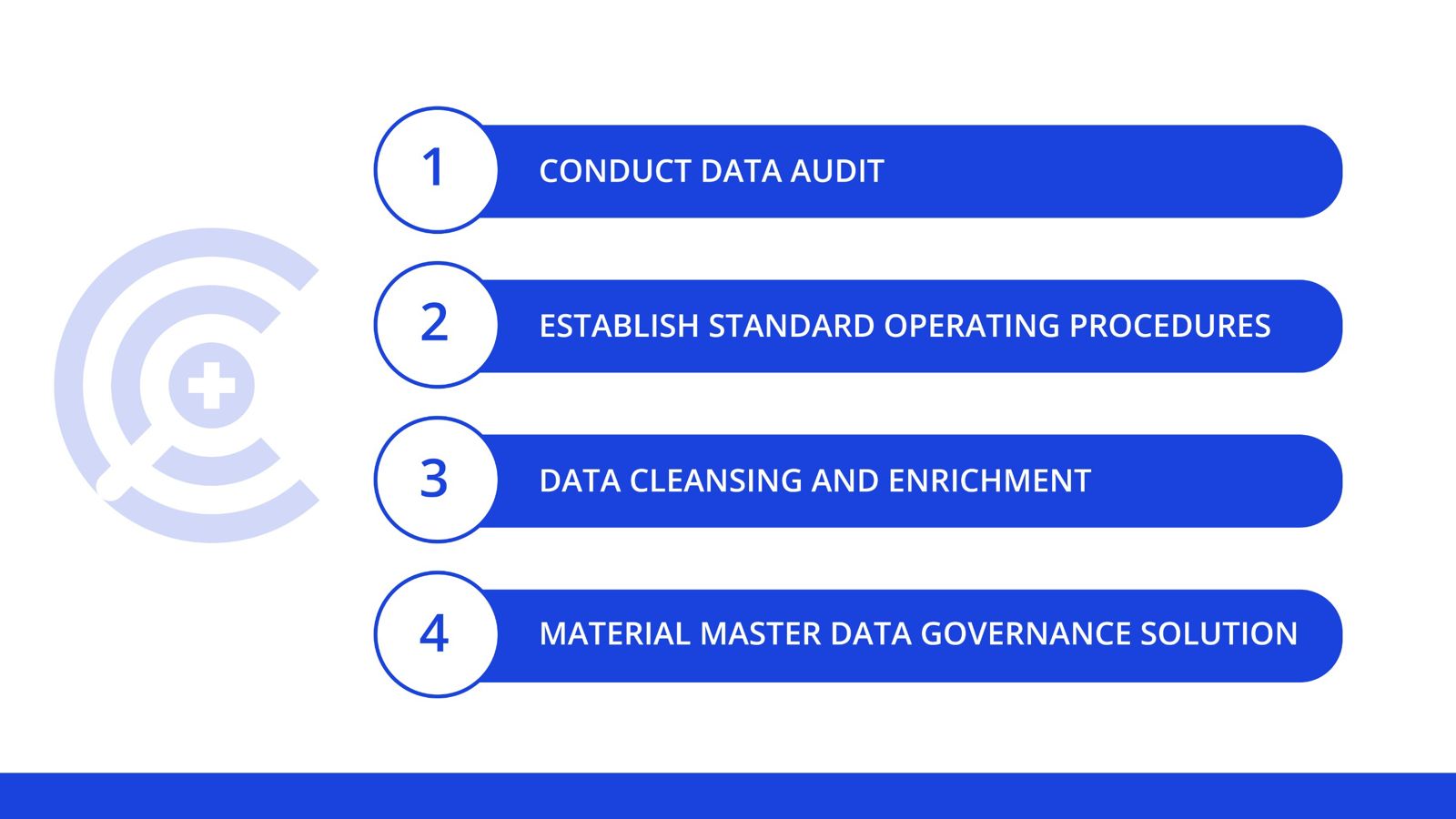
1. Conduct a Data Quality Assessment
The first step is understanding the current state of material master data.
A comprehensive assessment identifies:
- • Duplicate materials
- • Incomplete records
- • Obsolete materials
- • Classification inconsistencies
- • Missing attributes
This assessment establishes the scope of cleansing activities and prioritizes remediation efforts.
2. Remove Duplicate Material Records
Duplicate materials are among the most common master data challenges.
Organizations should leverage advanced matching techniques to identify records based on:
- • Material descriptions
- • Manufacturer part numbers
- • Technical specifications
- • Commodity classifications
Consolidating duplicates improves inventory accuracy and procurement efficiency.
3. Standardize Material Descriptions
A standardized material description framework should include:
- • Material type
- • Dimensions
- • Technical specifications
- • Manufacturer details
- • Industry standards
Standardization ensures consistency across business units and geographic regions.
4. Archive Obsolete Materials
Not every material should be migrated to SAP S/4HANA.
Organizations should identify and archive:
- • Inactive materials
- • Obsolete inventory
- • Unused records
- • Legacy duplicates
Standardization ensures consistency across business units and geographic regions.
5. Enrich Material Data
Data enrichment improves the value and usability of material records.
Typical enrichment activities include:
- • Adding manufacturer information
- • Updating technical attributes
- • Completing classification structures
- • Enhancing procurement data
Enriched data supports better operational decision-making after migration.
6. Establish Master Data Governance
Data quality improvements must be sustainable.
Organizations should implement governance frameworks that define:
- • Data ownership
- • Material creation workflows
- • Approval processes
- • Data quality standards
- • Ongoing monitoring procedures
Governance prevents future data degradation.
Why Choose Primezerve for SAP Material Master Data Cleansing?
At Primezerve, we help organizations maximize the success of SAP S/4HANA migration projects through specialized material master data services.
Our capabilities include:
- • Material Master Data Cleansing
- • Material Data Standardization
- • Duplicate Material Identification and Removal
- • Material Data Enrichment
- • SAP Data Migration Preparation
- • Master Data Governance Frameworks
- • Data Quality Assessments
Our proven methodologies help enterprises reduce migration risks, improve data quality, and accelerate digital transformation initiatives.
Conclusion
A successful SAP S/4HANA migration begins long before data is loaded into the new system. Material master data quality plays a critical role in determining the efficiency, accuracy, and long-term value of the SAP environment.
Organizations that invest in material master data cleansing gain cleaner data, lower migration risk, improved operational performance, and faster realization of SAP benefits.
By eliminating duplicates, standardizing material descriptions, enriching records, and implementing strong governance, enterprises can build a trusted data foundation for SAP S/4HANA success.
With Primezerve's expertise in material master data management and SAP migration support, organizations can confidently transform their material data into a strategic asset that drives business growth and operational excellence.